
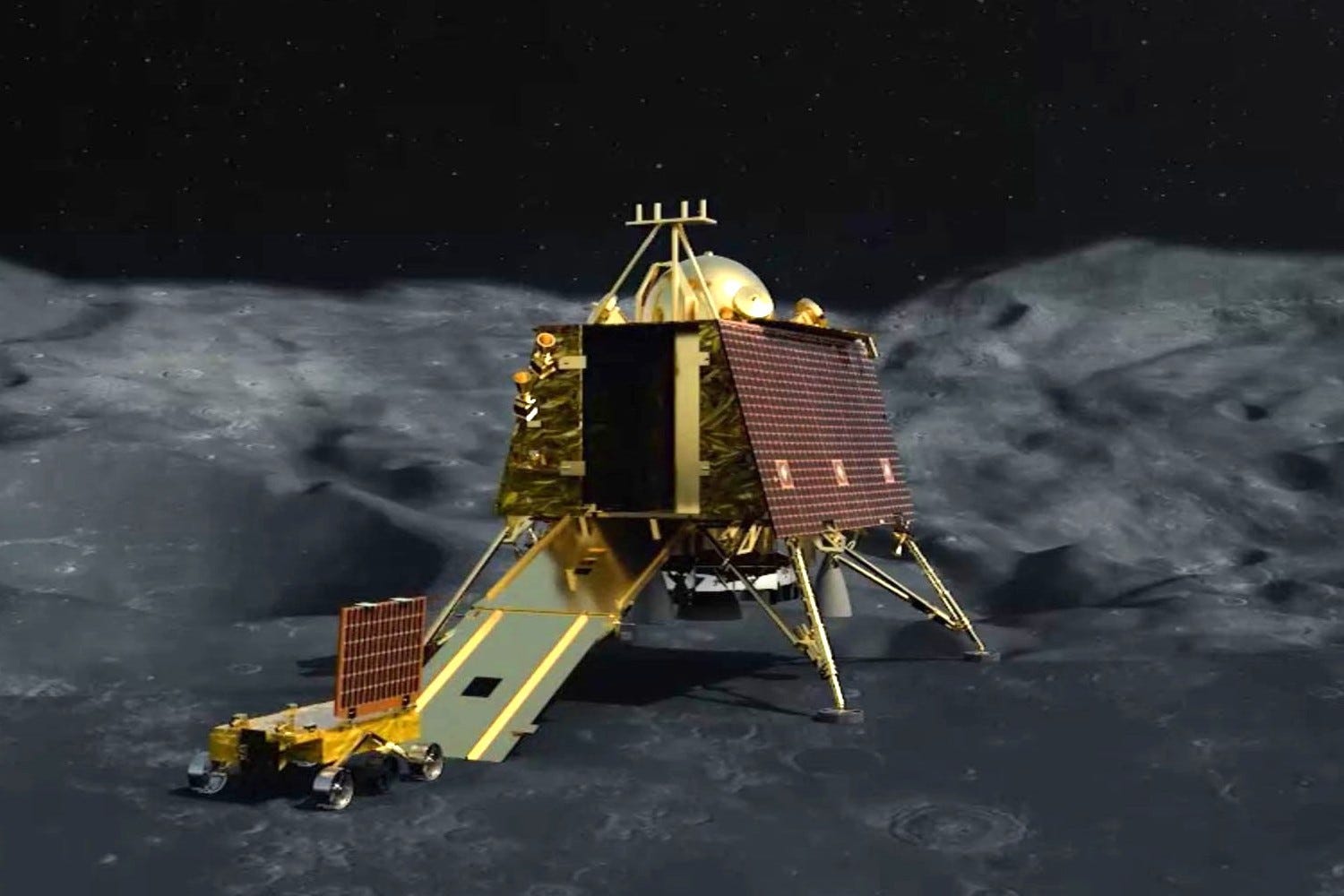
சந்திரயான் 1, 2 மற்றும் 3 பற்றிய முக்கிய தகவல்கள் & ஒப்பீடு
உங்களின் போட்டித் தேர்வுகளுக்கு, குறிப்பாக UPSC, NET, TNPSC மற்றும் பிற வங்கித் தேர்வுகளுக்குத் தயாராகும் விண்ணப்பதாரர்களுக்கு இந்தப் பதிவு மிகவும் பயனுள்ளதாக இருக்கும்.
This post will be very useful for the candidates who is preparing for your competitive exams, especially, UPSC, NET, TNPSC and other bank exams.
| Particulars | Chandrayaan 1 | Chandrayaan 2 | Chandrayaan 3 |
| Launch Date | 2008-10-22 | 2019-07-22 | 2023-07-14 |
| Alternate Names | 33405 Chandrayaan 1 Chandrayaan1 Chandrayaan 1 Orbiter CH1-ORB Chandrayaan-1 Orbiter | Chandrayaan2 44441 | Chandrayaan3 |
| Launch Vehicle | PSLV-XL | LVM 3 | LVM 3 |
| Launch Site | Satish Dhawan Space Centre, Sriharikota, India | Satish Dhawan Space Centre, Sriharikota, India | Satish Dhawan Space Centre, Sriharikota, India |
| Mass | 523 kg | 3850 kg | 3895 kg |
| Nominal Power | 750 W | 1000 W | 738 W |
| Mission Design and Management/ Funding Agency | Indian Space Research Organization (ISRO, India) | Indian Space Research Organization (ISRO, India) | Indian Space Research Organization (ISRO, India) |
| Discipline | Planetary Science | Planetary Science | Planetary Science |
| Goal | The study of the chemical, mineralogical and photogeologic mapping of the Moon | To demonstrate the ability to soft-land and operate a robotic rover on the lunar surface and to study lunar topography, mineralogy, elemental abundance, the lunar exosphere, and signatures of hydroxyl and water ice | To demonstrate end-to-end capability in safe landing and roving on the lunar surface. To demonstrate Rover roving on the moon and To conduct in-situ scientific experiments. |
| Lunar landing site | Crash landing near the moon’s south pole, making India the fourth country to place a probe on the lunar surface. | The lander and the rover were scheduled to land on the near side of the Moon, in the south polar region at a latitude of about 70° south | The lander Vikram and the rover Pragyan will be placed on the Moon’s surface in the Manzinus C crater, which is located in the south polar region. |
| Scientific Instruments | Main Satellite 1. Terrain Mapping Camera (TMC) 2. Hyper Spectral Imager (HySI) 3. Lunar Laser Ranging Instrument (LLRI) 4. High Energy X-ray Spectrometer (HEX) 6. Chandrayaan-1 X-ray Spectrometer (CIXS) 7. Near Infrared Spectrometer (SIR-2) 8. Sub Kev Atom Reflecting Analyzer (SARA) 9. Miniature Synthetic Aperture Radar (Mini SAR) 10. NASA’s Moon Mineralogy Mapper (M3) 11. Radiation Dose Monitor (RADOM) Moon Impact Probe (MIP) 1. Radar Altimeter 2. Video Imaging System 3. Chandra’s Altitudinal Composition Explorer (Mass Spectrometer) (CHASE) | S200 solid rocket booster L110 liquid state C25 Upper stage The Chandrayaan-2 mission consisted of three main modules: lunar orbiter Vikram lander (named after Vikram Sarabhai, the late father of India’s space program) lunar rover named Pragyan All of the above parts were developed in India. | Lander payloads: Chandra’s Surface Thermophysical Experiment (ChaSTE) to measure the thermal conductivity and temperature; Instrument for Lunar Seismic Activity (ILSA) for measuring the seismicity around the landing site; Langmuir Probe (LP) to estimate the plasma density and its variations. A passive Laser Retroreflector Array from NASA is accommodated for lunar laser ranging studies. Rover payloads: Alpha Particle X-ray Spectrometer (APXS) and Laser Induced Breakdown Spectroscope (LIBS) for deriving the elemental composition in the vicinity of landing site. |
Source: NASA.gov, The National Aeronautics and Space Administration & National Space Science Data Center

Happy Learning
 SAAI Academy