
Horticulture (UG Degree Standard) – Subject Paper Code: 493
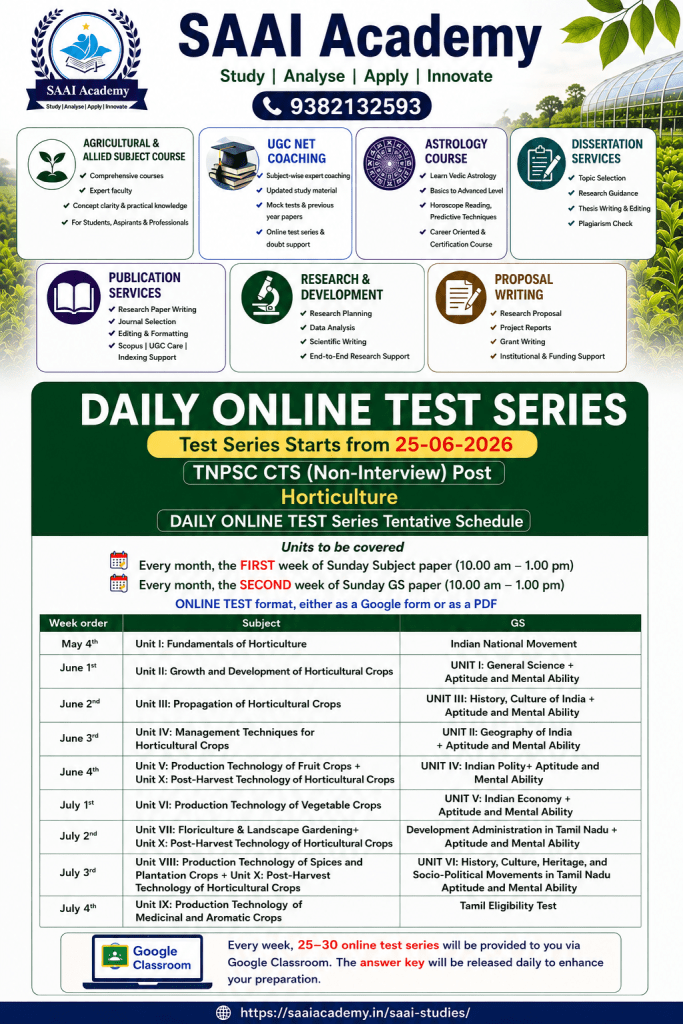
Horticulture online test series module
Model online test series question bank
Unit I: Fundamentals of Horticulture (15 Questions) Scope and importance – State, National and Global scenario of horticultural crops – Area and production – Import and export – Nutritive value and Medicinal value of horticultural crops – Horticultural zones of Tamil Nadu and India – National and regional agencies involved in promotion of horticultural industry in India (NHB, APEDA, Commodity Boards and Government schemes) – Classification of horticultural crops – Factors limiting horticultural crop production – Role of season – Soil and climate requirements – Physical and chemical properties of soil – Climatic factors – Light, temperature, photoperiod, relative humidity, rainfall, altitude, microclimate – Kitchen gardening – Nutrition gardening – Truck gardening – Market gardening – Vegetable forcing – Protected and precision horticulture – Hydroponics, Aeroponics – Nutrient Film Technique – Vertical farming – Horticulture therapy.
Get updated about the current affairs and Competitive Exam preparation through: https://chat.whatsapp.com/GB3jtldUb6NDAF4FIdKhDd
Unit II: Growth and Development of Horticultural Crops (15 Questions) Important phases of growth and development – Bearing habits – Classification of horticultural crops based on life cycle – Annual, biennial perennial (woody and herbaceous perennials) – Fruitfulness and unfruitfulness – External and internal factors associated with unfruitfulness – Physiology of flowering, fruit set, ripening and senescence – Fruitdrop – Causes and control measures – Plant growth regulators – Functions and role in horticultural crops – Bud dormancy – Dormancy breaking – Parthenocarpy – Parthenogenesis – Polyembryony – Stenospermocracy – Vivipary – Apomixis.
Unit III: Propagation of Horticultural Crops (15 Questions) Propagation – Definition – Establishment of nursery – Site selection – Tools and implements propagation structures – Mist chamber, phytotron – Humidifiers – Greenhouse – Glasshouse – Polyhouse – Shade net, glass house, poly tunnels, cold frames and hotbeds, pit nursery – Media and containers – Soil sterilization – Sexual propagation – Merits and demerits – Crops propagated through seeds – Seed viability, longevity, dormancy, germination – Pre-sowing treatment – stratification, scarification, seed priming, seed pelleting, seed invigoration, seedling vigour – Raised seed bed and pro-tray nursery – Asexual propagation – Merits and demerits – Methods of vegetative propagation – Identification of plus trees – Mother block, scion bank – Clonal nursery – Chimeras – Cutting – Layering – Grafting, budding types – Anatomical and physiological basis of grafting – Stock scion relationship, graft compatibility Budwood selection and certification – Top working and after care – Propagation through specialized plant parts (bulbs, tubers, offsets, runners, suckers, slip, crown, rhizomes, corms) – Quality management and nursery certification – Micro propagation – Application – infrastructure requirements – Types of media – Stages of micro propagation – Micro grafting – in vitro propagation of important horticultural crops.
Unit IV: Management Techniques for Horticultural Crops (15 Questions) Planning – Layout and management of orchards – Fencing – Wind breaks and shelter beds – Spacing – Planting system – Physical and chemical properties – Soil reaction – acid, saline and alkaline soils – Soil fertility – Essential elements – Functions – Organic manures and inorganic fertilizers, Water soluble fertilizers – Bio-fertilizers, vermicomposting – Applications and management – Nutrient deficiencies and corrective measures – Physiological disorders and remedies – Irrigation, micro irrigation and maintenance – Critical stages of water requirement – Effect of water stress on crop yield – Anti-transpirants – management of irrigation water quality – Conventional and micro irrigation – Fertigation – Mulching – Sod culture – Weed management – Application growth regulators – Training and pruning principles and methods – Rejuvenation of senile and old orchards – Cropping systems – Cover cropping – Multitier cropping – Intercropping – Special horticultural techniques (pinching, thinning, disbudding, blanching, smudging, notching, ringing) – Principles of organic horticulture – GAP and GMP.
Unit V: Production Technology of Fruit Crops (30 Questions) Scope and importance of fruit crops – Composition and uses – Origin and distribution – Species – Season – Climate and soil requirement – Varieties and hybrids – Propagation techniques – Planting systems and planting density including High density planting (HDP) and ultra high-density planting (UHDP) – spacing – Water and nutrient management – Fertigation – Weed management – Canopy management – Training and pruning – Intercultural practices – Off season production – Special horticultural techniques – Use of plant growth regulators – Maturity indices – Harvest and yield – Nutrient deficiencies and physiological disorders and its corrective measures and management of important pest and diseases of important fruit crops: – Mango, Banana, Acidlime, Sweet orange, Mandarin, Grapes, Papaya, Guava, Sapota, Pineapple, Jackfruit, Pomegranate, Aonla, Annona, Ber, Sweet tamarind, Jamun, Fig, Apple, Pear, Plum, Peach, Strawberry, Litchi, Avocado, Carrisa, West Indian Cherry, Date Palm, Phalsa, Bael, Wood apple, Rose apple, Bread fruit, Bilimbi, Durian, Carambola, Mangosteen, Loquat, Passion fruit, Rambutan, Pumelo, Grape fruit, Cherries, Currants, Apricot, Persimmon, Olive, Pecanut, Chestnut, Hazelnut, Kiwi, Pistachionut, macadamianut, Walnut and Almond and minor tropical, arid and temperate fruit crops.
Unit VI: Production Technology of Vegetable Crops (30 Questions) Scope and importance of vegetable crops – Composition and uses – Origin and distribution – Area and production – Soil and climatic requirements – Varieties and hybrids – Propagation methods – Seed rate – Sowing and nursery practises – Containerized seedling production – Season – Planting methods – Water, nutrient and weed management – Fertigation – Training for vegetables – Intercultural practices – Maturity indices – Harvest and yield – Nutrient deficiencies and physiological disorder and its corrective measures of important vegetable crops: Tomato, Brinjal, Chilli and Capsicum (Sweet Pepper), Bhendi, Leguminous vegetables (Beans, Peas, Cluster beans, Cowpea, Dolichos bean); Bulbous vegetables (Onion, Garlic); Tuber crops – (Potato, Tapioca, Sweet potato, Elephant foot yam, Dioscorea, Chinese potato, Colacassia); Cucurbitaceous vegetables (Cucumber, Bitter gourd, Snake gourd, Ridge gourd, Ash gourd, Musk melon, Water melon, Pumpkin) – Cruciferous vegetables (Cabbage, Cauliflower, Knol khol, Brussels sprout, Sprouting broccoli and Chinese Cabbage); Root vegetables (Carrot, Radish, Beetroot, Turnip) – Leafy vegetables (Spinach, Lettuce, Palak, Amaranthus, Agathi and Asparagus) – Perennial vegetables (Drumstick, Cocciena) – Protected cultivation of vegetable crops – Precision farming of important vegetable crops and seed production.
Unit VII: Floriculture & Landscape Gardening (30 Questions) Scope and importance of flower crops production – Uses – Origin and distribution – Area and production – Climate and soil requirement – Species and varieties – Propagation, season – Spacing and planting methods – Irrigation, nutrient management – Fertigation – Weed management – Training and pruning – Intercultural operations – Special horticultural techniques – Growth regulators – Off season production – Maturity indices – Harvest and yield and management of important pest and diseases for important loose flower crops: Jasmine, Rose, Tuberose, Chrysanthemum, Marigold, Nerium, Ixora and Crossandra – Cut flowers – Rose, Carnation, Anthurium, Orchid, Lilium and Gerbera – Cut foliage and fillers. Principles of Landscape designing – Styles of gardening – Types of gardening viz., Hindu, English, Mughal, Japanese, Persian, Italian, French gardening Garden components – Trees foliage flowering and avenue trees – Burlapping – Shrubs – Hedge and edge plants – Flowering annuals creepers and Climbers – Cacti and succulents Lawn – Types of grasses – Layout, planting and maintenance of lawn – Indoor plants and interior spacing – Garden adornments – Principles and styles of flower arrangements – Bonsai styles and culture – Industrial, Institutional, Public and Private landscaping – Special types of gardening – Kokedama, tray, terrarium, roof and vertical gardening – Computer Aided Designs for Landscaping – AUTOCAD garden design.
Unit VIII: Production Technology of Spices and Plantation Crops (20 Questions) Scope and Importance of spices and plantation crops – Composition and uses – Origin and distribution – Area and production – Climate and soil requirements – Species and varieties – Season, seed rate / Vegetative propagation methods – Spacing – Planting systems – High density planting (HDP) – Ultra High Density Planting (UHDP) – Irrigation and nutrient management – Fertigation – Weed management – Training and pruning – Cropping systems – Multitier cropping – Cover cropping – Inter cropping – Growth regulators – Mulching – Shade trees and canopy regulation – Maturity indices, harvest, yield and management of important pests and diseases – Processing methods of important plantation and spice crops: Major spices, seed spices, tree spices, herbal spices and minor spices – Black Pepper, Cardamom, Turmeric, Ginger, Curry leaf, Clove, Nutmeg, Cinnamon, Coriander, Fenugreek, Cumin, Tamarind, Allspice and Vanilla – Plantation crops – Tea, Coffee, Rubber, Cocoa, Coconut, Oilpalm, Cashew, Palmyrah and Arecanut.
Unit IX: Production Technology of Medicinal and Aromatic Crops (10 Questions) Scope and importance of medicinal and aromatic crops – Composition and uses – Origin and distribution – Area and Production – Ex situ and in situ conservation – Classification of medicinal and aromatic crops – Constraints in medicinal plants cultivation – Climate and soil – Varieties – Propagation – Nursery practices – Planting methods – Cropping systems – Manures and Fertilizers – Irrigation – Intercultural operations – Harvest indices – Harvest and yield – Management of important pests and diseases – Production systems – Contract farming – Good Agricultural Practices (GAP) – Good Cultivation Practices (GCP) – Good Manufacturing Practices (GMP) – Organic production and certification – Classification and distillation methods of essential oils – Secondary metabolite production – Value addition – Organisational support for promotion of medicinal and aromatic crops – Medicinal crops: Senna, Periwinkle, Glory lily, Aswagandha, Medicinal coleus and Solanum, Sweet flag, Aloe, Isabgol, Phyllanthus, Stevia, Opium poppy. Aromatic crops: Lemon grass, Citronella, Vetiver, Ocimum, Davana, Mint, Geranium, Patchouli and Eucalyptus.
Unit X: Post-Harvest Technology of Horticultural Crops (20 Questions) Importance of Post-harvest handling in horticultural crops – Maturity indices – Postharvest handling methods – Ripening chambers – Washing – Grading – Waxing – Grades and standards – Methods of packing – Types of containers and their advantages and disadvantages – Storage – Principles and methods of refrigerated storage – Storage methods – Pre-cooling – Controlled Atmospheric Storage (CAS), Modified Atmospheric Storage (MAS) – Low pressure storage and cold chain concept – Importance and scope of processing industries in India – General principles of fruit and vegetable preservation like canning, dehydration, freezing, fermentation – Use of chemicals (preservatives) and irradiation – Good Manufacturing Practices (GMP) – Food safety and quality control.
Part B: General Studies (Paper I)
UNIT I: General Science (5 Questions) Scientific knowledge and scientific temper – Power of reasoning – Rote learning vs conceptual learning – Science as a tool to understand the past, present, and future; Nature of universe – General scientific laws – Mechanics – Properties of matter, force, motion, and energy – Everyday application of the basic principles of mechanics, electricity and magnetism, light, sound, heat, nuclear physics, laser, electronics, and communications; Elements and compounds, acids, bases, salts, petroleum products, fertilizers, pesticides; Main concepts of life science, classification of living organisms, evolution, genetics, physiology, nutrition, health and hygiene, human diseases; Environment and ecology; Latest inventions in science and technology; Current affairs.
UNIT II: Geography of India (5 Questions) Location – Physical features – Monsoon, rainfall, weather and climate – Water resources – Rivers in India – Soil, Minerals and Natural Resources – Forest and Wildlife – Agricultural pattern; Transport – Communication; Social Geography – Population density and distribution – Racial, linguistic groups and major tribes; Natural calamity – Disaster management; Environmental pollution – Reasons and preventive measures – Climate change – Green energy; Geographical landmarks; Current affairs.
UNIT III: History, Culture of India, and Indian National Movement (10 Questions) Indus Valley Civilization – Guptas, Delhi Sultans, Mughals, and Marathas – Age of Vijayanagaram and Bahmani Kingdoms – South Indian History; National Renaissance – Early uprising against British rule – Indian National Congress – Emergence of leaders – B.R.Ambedkar, Bhagat Singh, Bharathiar, V.O.Chidambaranar, Jawaharlal Nehru, Kamarajar, Mahatma Gandhi, Maulana Abul Kalam Azad, Thanthai Periyar, Rajaji, Subash Chandra Bose, Rabindranath Tagore, and others; Different modes of agitation: Growth of Satyagraha and Militant Movements; Communalism and Partition; Change and continuity in the socio-cultural history of India; Characteristics of Indian Culture, Unity in Diversity – Race, Language, Custom; India as a secular state, Social harmony; Prominent personalities in various spheres – Arts, Science, Literature and Philosophy.
UNIT IV: Indian Polity (15 Questions) Constitution of India – Preamble to the Constitution – Salient features of the Constitution – Union, State and Union Territory – Citizenship, Fundamental Rights, Fundamental Duties, Directive Principles of State Policy – Union Executive, Union Legislature – State Executive, State Legislature – Local Governments, Panchayat Raj – Spirit of federalism: Centre – State relationships – Election – Judiciary in India – Rule of Law – Corruption in public life – Anti-corruption measures – Lokpal and Lok Ayukta – Right to Information – Empowerment of Women – Consumer Protection Forums, Human Rights Charter; Political parties and political system in India; Current affairs.
UNIT V: Indian Economy and Development Administration in Tamil Nadu (20 Questions) Nature of Indian Economy – Five-year plan models – an assessment – Planning Commission and Niti Aayog; Sources of revenue – Reserve Bank of India – Fiscal Policy and Monetary Policy – Finance Commission – Resource sharing between Union and State Governments – Goods and Services Tax; Structure of Indian Economy and Employment Generation, Land Reforms and Agriculture – Application of Science and Technology in Agriculture – Industrial growth – Rural welfare oriented programmes – Social problems – Population, Education, Health, Employment, Poverty; Human Development Indicators in Tamil Nadu and a comparative assessment across the Country – Impact of social reform movements in the socio-economic development of Tamil Nadu – Political parties, and welfare schemes for various sections of people – Rationale behind the reservation policy, and access to the social resources – Economic trends in Tamil Nadu – Role and impact of social welfare schemes in the socio-economic development of Tamil Nadu – Social Justice and social harmony as the cornerstones of socio-economic development; Education and health systems in Tamil Nadu; Geography of Tamil Nadu and its impact on economic growth; Achievements of Tamil Nadu in various fields; e-Governance in Tamil Nadu; Public awareness and General administration – Welfare oriented Government schemes and their utility, Problems in public delivery systems; Current socio-economic issues; Current affairs.
UNIT VI: History, Culture, Heritage, and Socio-Political Movements in Tamil Nadu (20 Questions) History of Tamil Society, related archaeological discoveries, Tamil literature from Sangam age till contemporary times – Thirukkural – Significance as a secular literature – Relevance to everyday life, Impact of Thirukkural on humanity, Thirukkural and universal values – Relevance to Socio-politicoeconomic affairs, Philosophical content in Thirukkural; Role of Tamil Nadu in freedom struggle – Early agitations against British Rule – Role of women in freedom struggle; Evolution of 19th and 20th century socio-political movements in Tamil Nadu – Justice Party, Growth of Rationalism – Self Respect Movement, Dravidian Movement, and principles underlying both these movements; Contributions of Thanthai Periyar and Perarignar Anna.
PART C: Aptitude and Mental Ability (SSLC STANDARD)
UNIT I: Aptitude (15 Questions)
Simplification – Percentage – Highest Common Factor (HCF) – Lowest Common Multiple (LCM) – Ratio
and Proportion – Simple interest – Compound interest – Area – Volume – Time and Work.
UNIT II: Reasoning (10 Questions)
Logical reasoning – Puzzles – Dice – Visual reasoning – Alpha numeric reasoning – Number series
Part A – Tamil Eligibility Test (Paper I) Code: 503
அலகு I: இலக்கணம் (25 கேள்விகள்)
எழுத்து: பிரித்து எழுதுதல் – சேர்த்து எழுதுதல் – சந்திப்பிழை – குறில், நெடில் வேறுபாடு – லகர, ளகர, றகர வேறுபாடு – னகர, ணகர வேறுபாடு – ரகர, றகர வேறுபாடு – இனவெழுத்துகள் அறிதல் – கூட்டு எழுத்துகள் – வினா எழுத்துகள் – ஒருமைப் பன்மை அறிதல்.
சொல்: வேற்சொல் அறிதல் – வேற்சொல்லில் இருந்து வினைமுற்று, வினையெச்சம், வினையாலணையும் பெயர், பெயரெச்சம் வகை அறிதல் – அயற்சொல் தமிழ்ச்சொல், எதிர்ச்சொல் வினைச்சொல் – எழுத்துப்பிழை, ஒற்றுப்பிழை அறிதல் – இரண்டு வினைச் சொற்களின் வேறுபாடு அறிதல்.
அலகு II: சொல்லகதி (15 கேள்விகள்)
(i) எதிர்ச்சொல்லை எடுத்தெழுதுதல், ஓரெழுத்து ஒரு மொழி, உரிய பொருளைக் கண்டறிதல் – ஒருபொருள் தரும் பல சொற்கள், பொருந்தா சொல்லைக் கண்டறிதல், அகர வரிசைப்படி சொற்களைச் சீர்செய்தல்; ஒருபொருள் பன்மொழி – இருபொருள் குறிக்கும் சொற்கள் – பேச்சு வழக்கு, எழுத்து வழக்கு – சொல்லும் பொருளும் அறிதல் – ஒரு சொல்லிற்கு இணையான வேறு சொல் அறிதல்.
(ii) கோடிட்ட இடத்தில் சரியான சொல்லைத் தேர்ந்தெடுத்து எழுதுதல் – (எ.கா.) பள்ளிக்குச் சென்று கல்வி பயிலுதல் சிறப்பு (பயிலுதல், எழுதுதல்) – வானில் முக்கி தோன்றினால் மழை பொழியும் (முகில், நட்சத்திரம்); பொருத்தமான பொருளைத் தெரிவு செய்தல் – (எ.கா.) ஊடகம் – தகவல் தொடர்புச் சாதனம் (செய்தி, தகவல் தொடர்புச் சாதனம்) – சமூகம் – மக்கள் குழு (மக்கள் குழு கூட்டம்); ஊர்ப் பெயர்களின் மரூஉவை எழுதுக – (எ.கா) புதுச்சேரி – புதுவை, மன்னார்குடி- மன்னை, மயிலாப்பூர் – மயிலை; பிழை திருத்துக (எ.கா) ஒரு – ஓர் பேச்சு வழக்குச் சொற்களுக்கு இணையான தூய தமிழ்ச் சொற்களை இணைத்தல் – (எ.கா) வெத்தில – வெற்றிலை, நாற்காலி – நாற்காலி.
(iii) பேச்சு வழக்குத் தொடர்களினுள்ள பிழை திருத்தம் – (எ.கா.) நேத்து மழ பெயஞ்சது – நேற்று மழை பெய்தது; சொற்களை இணைத்துப் புதிய சொல் உருவாக்குதல்: மற்றும், அல்லது. ஆல், பிறகு வரை, இதுவுமல்ல, இருப்பினும், எனினும், இதனால்; அடைப்புக்குள் உள்ள சொல்லைத் தகுந்த இடத்தில் சேர்த்தல் – (எனவே, ஏனெனில், ஆகையால், அதுபோல, அதனால், வரை, பின்பு) – (எ.கா) நான் காட்டிற்குச் சென்றேன். அதனால் புலியைப் பார்த்தேன் – மாலைநேரம் முடியும் வரை விளையாடுவேன். தேர்வு முடிந்த பின்பு சுற்றுலா செல்லலாம்; பொருள் தரும் ஓர் எழுத்து – (எ.கா) ஆ-பசு, ஈ-கொடு, தை-மாதம், தீ-நெருப்பு; பல பொருள் தரும் ஒரு சொல்லைக் கூறுக – (எ.கா) கமலம், கஞ்சம், முளரி, பங்கயம் இச்சொற்கள் தாமரையைக் குறிக்கும்.
அலகு III: எழுதும் திறன் (15 கேள்விகள்)
(i) சொற்களை ஒழுங்குபடுத்திச் சொற்றொடர் அமைத்தல் – தொடர் வகைகள் – செய்வினை, செயப்பாட்டு வினை – தன்மை, முன்னிலை – ஒருமைப் பன்மை பயின்று தொடர்தல்.
(ii) மரபுத் தமிழ்: திணை மரபு – உயர்திணை: அம்மா வந்தது – அம்மா வந்தாள்: அஃறிணை: மாடுகள் நனைந்தது – மாடுகள் நனைந்தன; பால் மரபு: ஆண்பால்: அவன் வந்தது – அவன் வந்தான்; பெண்பால்: அவள் வந்தது – அவள் வந்தாள்; பலர் பால்: அவர்கள் வந்தார்கள் – அவர்கள் வந்தனர்; ஒன்றன் பால்: அது வந்தன – அது வந்தது; பலவின் பால்: பறவைகள் பறந்தனர் – பறவைகள் பறந்தன; காலம்: நேற்று மழை பெய்யும் – நேற்று மழை பெய்தது; நேற்று வருவேன் – நேற்று வந்தேன்; இளமைப் பெயர்: பசு – கன்று; ஆடு – குட்டி; ஒலிமரபு: நாய் கத்தியது – நாய் குறைத்தது; வினைமரபு: குடைமுடை, சோறு உண்; தொகை மரபு: மக்கள் கூட்டம் – ஆட்டு மந்தை, நிறுத்தல் குறியீடுகள்: கால்புள்ளி, அரைப் புள்ளி, முக்கால் புள்ளி, முற்றுப் புள்ளி, வியப்புக் குறி, வினாக்குறி அமையும் இடங்கள்.
அலகு IV: கலைச் சொற்கள் (10 கேள்விகள்)
பலதுறை சார்ந்த கலைச் சொற்களான அறிவியல், கலை, மருத்துவம், மேலாண்மை, சட்டம், புவியியல், தொழில்நுட்பம், ஊடகம், தகவல் தொழில்நுட்பம் உள்ளிட்ட பலதுறை சார்ந்த கலைச் சொற்களுக்கு நேரான தமிழ்ச் சொற்களை அறிந்திருக்க வேண்டும். (உதாரணம்: search engine – தேடு பொறி, வலசை – Migration, ஒவ்வாமை – Allergy, மரபணு – Gene, கடல் மைல் – Nautical Mile).
அலகு V: வாசித்தல் – புரிந்து கொள்ளும் திறன் (15 கேள்விகள்)
கொடுக்கப்பட்ட பத்தியிலிருந்து கேட்கப்பட்ட வினாக்களுக்கு சரியான விடையைத் தேர்ந்தெடுத்தல் – செய்தித்தாள் – தலையங்கம் – முகப்புச் செய்திகள் – அரசு சார்ந்த செய்திகள் – கட்டுரைகள் – இவற்றை வாசித்தல் –புரிந்து கொள்ளும் திறன் – உவமைத் தொடரின் பொருளாதிகள் – மரபுத் தொடரின் பொருளாதிகள் – பழமொழிகள் பொருளாதிகள் – ஆவண உள்ளடக்கங்களைப் புரிந்து கொள்ளும் திறன்.
அலகு VI: எளிய மொழி பெயர்ப்பு (5 கேள்விகள்)
ஆங்கிலம் மற்றும் பிறமொழிச் சொற்களுக்கு இணையான தமிழ்ச் சொற்கள் அறிதல் வேண்டும் – பயன்பாட்டில் உள்ள ஆங்கிலச் சொற்களை மொழிபெயர்த்தல் வேண்டும் (சான்று: pendrive, printer, computer, keyboard) – ஆவணங்களின் தலைப்பு – கோப்புகள் – கடிதங்கள் – மனுக்கள் – மொழிபெயர்ப்பு புரிந்து கொள்ளுதல்.
அலகு VII: இலக்கியம், தமிழ் அறிஞர்களும், தமிழ்த்தொண்டும் (15 கேள்விகள்)
திருக்குறள் தொடர்பான செய்திகள் (இருபது அதிகாரங்கள் மட்டும்) ஒழுக்கமுடைம, பொறையுடைம, ஊக்கமுடைம, விருந்தோம்பல், அறன் வலியுறுத்தல், ஈகை, பெரியாரைத் துணைக்கோடல், வினை செயல்வகை, அவையஞ்சாமை, கண்ணோட்டம், அன்புடைமை, கல்வி, நடுநிலைமை, சூது ஒழுக்கம், கல்லாமை, செங்கோன்மை, பண்புடைமை, நட்பாராய்தல், புறங்கூறாமை, அருளுடைமை – மேற்கோள்கள் – அறநூல் தொடர்பான செய்திகள் (நாலடியார், நான்மணிக்கடிகை, பழமொழி நானூறு, முதுமொழிக்காஞ்சி, திரிகடுகம், இன்னா நாற்பது, சிறுபஞ்சமூலம், ஏலாதி, அவ்வையார் பாடல்கள்) – தமிழின் தொன்மை, சிறப்பு, திராவிட மொழிகள் தொடர்பான செய்திகள் – உ.வே.சாமிநாத ஐயர், தெ.பொ.மீனாட்சி சுந்தரம், சி.இலக்குவனார் தமிழ்ப்பணி தொடர்பான செய்திகள் – தேவநேயப் பாவாணர், அகரமுதலி, பாவலரேறு பெருஞ்சித்திரனார், ஜியு போப், வீரமாமுனிவர் தமிழ்த் தொண்டு தொடர்பான செய்திகள் – தமிழ்ச் சான்றோர் பற்றிய செய்திகள்: பாரதியார், டி.கே.சிதம்பரனாதர், தவத்திரு குன்றக்குடி அடிகளார், கண்ணதாசன், காயிதே மில்லத், தாராபாரதி, வேலுநாச்சியார், பட்டுக்கோட்டைக் கல்யாணசுந்தரம், முடியரசன், தமிழ் ஒளி உருத்திரங்கண்ணனார், கி.வா.ஜகந்நாதர், நாமக்கல் கவிஞர்.
Classes, test batches and books available
Best wishes
 SAAI Academy