
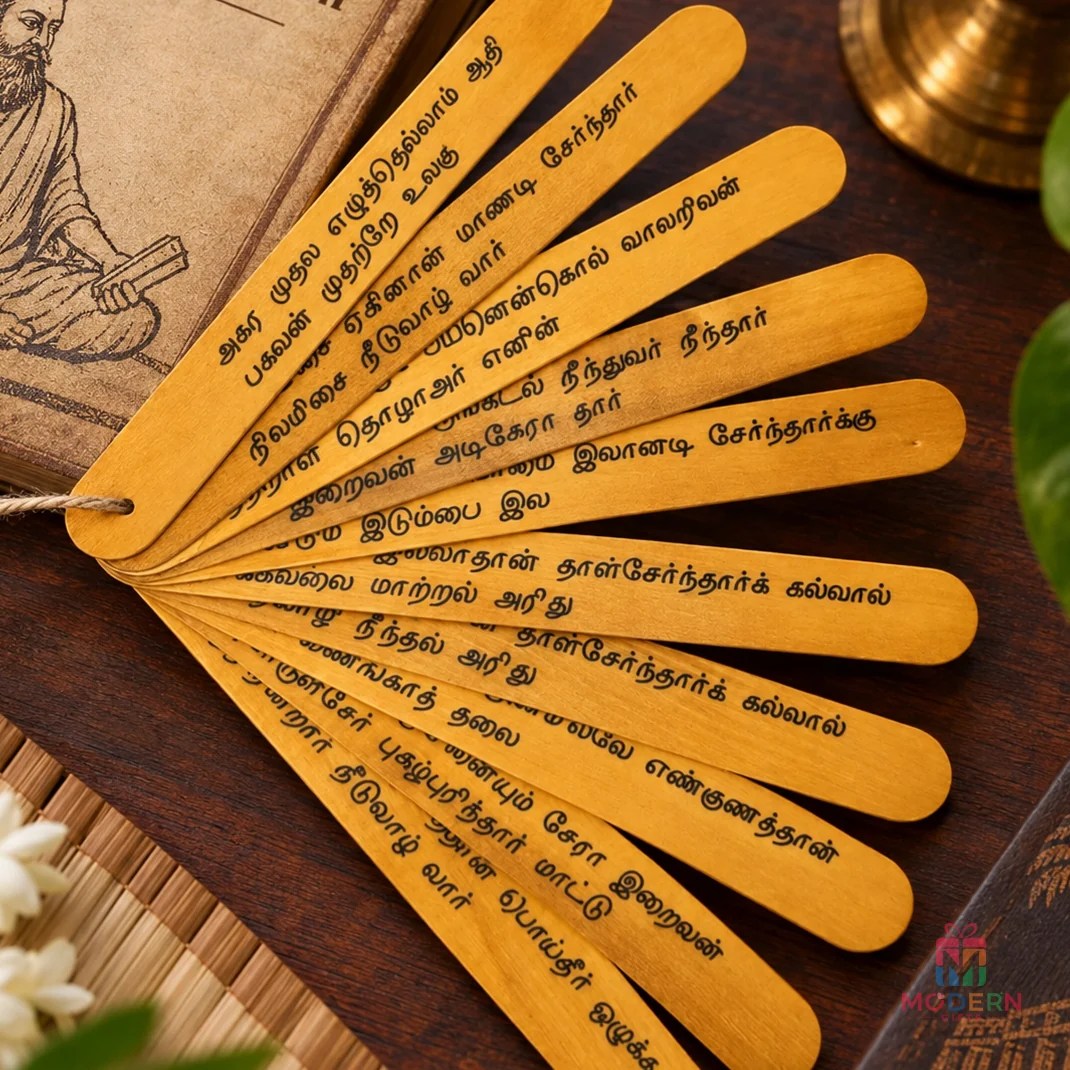
Core Facts & Repeated Basics
- Author (திருக்குறளை எழுதியவர்): Thiruvalluvar (திருவள்ளுவர்)
- Total Couplets (மொத்த குறள்கள்): 1,330 couplets
- Total Chapters (மொத்த அதிகாரங்கள்): 133 chapters (10 couplets per chapter)
- Three Major Divisions (பால்):
- Aram (அறத்துப்பால் – 38 chapters)
- Porul (பொருட்பால் – 70 chapters)
- Inbam / Kamatupal (காமத்துப்பால் – 25 chapters)
- First Chapter (முதல் அதிகாரம்): Kadavul Vazhthu (கடவுள் வாழ்த்து)
- Last Chapter (கடைசி அதிகாரம்): Oodaluvaagai (ஊடலுவகை)
- Best Commentator (சிறந்த உரை எழுதியவர்): Parimelalagar (பரிமேலழகர்)
- First Printed Edition: Published in 1812
- Two eyes of humanity (மனிதனின் இரு கண்கள்): Numbers (எண்) and Letters (எழுத்து)
Most Repeated Titles of Thiruvalluvar
- Deiva Pulavar (தெய்வப் புலவர்): Translates to “Divine Poet,” recognizing the sacred and universal wisdom of his couplets.
- Mudharpavalar (முதற்பாவலர்): Means “The First Poet,” highlighting his pioneering role in creating a foundational ethical text.
- Poyyil Pulavar (பொய்யில் புலவர்): Means “The Poet Without Falsehood,” referring to the timeless truth of his teachings.
- Nayanar (நாயனார்): An honorific title meaning “Respected Leader” or “Master,” commonly used in ancient Tamil texts to address him.
- Perunavalar (பெருநாவலர்): Translates to “Great Orator” or “Great Poet,” praising his mastery over language and brevity.
- Senapothar (செந்நாப்போதார்): Means “The Poet of the Pure/True Tongue,” celebrating the clarity and honesty of his words.
- Madhanubangi (மாதானுபங்கி): A traditional alternative name cited in classical commentaries to denote his deep understanding of human nature.
- Devar (தேவர்): Used by medieval commentators like Nachinarkiniyar to refer to Thiruvalluvar with reverence.
Key Teachings & Conceptual Questions
- Sweet Speech (இன்சொல்): Speaking kind words brings joy and prevents harm; bitter words are compared to choosing unripe fruits over ripe ones.
- Four Virtues of a King (அரசனின் நான்கு குணங்கள்): Beneficence, benevolence, rectitude, and care (கொடை, அளி, செங்கோன்மை, குடிோம்பல்).
- Controlling the Tongue (நாடளவு காத்தல்): Mandatory discipline for everyone.
- Managing Income and Expenditure: Sparing expenditure relative to limited income prevents future misery
1. Significance as a Secular Literature (மதச்சார்பற்ற தனித்தன்மையுள்ள இலக்கியம்)
- Universal Titles: Thirukkural is famously referred to as Ulaga Podhumarai (உலகப் பொதுமறை—Universal Scripture) and Poyya Mozhi (பொய்யா மொழி—Unfailing Word) because it applies to all humans regardless of caste, religion, or region.
- Secular God: In Kadavul Vazhthu (கடவுள் வாழ்த்து), Valluvar uses non-sectarian terms like Aadhi Bhagavan (ஆதி பகவன்) and Vaalarivan (வாலறிவன்), avoiding the names of specific religious deities.
- First Book Claim: Commentator Parimelalagar noted that Thirukkural is a pioneering work (Muthal Nool) and refused claims that it was merely a translation of earlier texts.
2. Relevance to Everyday Life (அன்றாட வாழ்வியலோடு தொடர்புத் தன்மை)
- Power of Time (காலமறிதல்): A crow can conquer an owl during the daytime; similarly, a leader must wait for the right time and place to defeat a stronger enemy.
- Food Sharing (பகுத்துண்ணல்): Hunger and disease will never touch a person who shares their food with others before eating.
- Thought Before Action (தெரிந்து செயல்வகை): One must think deeply and weigh the pros and cons before starting any action; thinking after starting is a disgrace.
- Social Harmony (உலகத்தோடு ஒட்ட ஒழுகல்): Even a highly learned scholar is considered a fool if they do not know how to live in harmony with society.
3. Impact of Thirukkural on Humanity (மானுடத்தின் மீதான திருக்குறளின் தாக்கம்)
- Global Translations: Thirukkural has been translated into over 107 languages. Key translators frequently asked in exams include Constanzo Beschi (Veeramamunivar—Latin), G.U. Pope (English), Karl Graul (German), and Ariel (French).
- Tributes by World Leaders: Mahatma Gandhi, Leo Tolstoy, and Albert Schweitzer praised its teachings on non-violence (Kollaamai) and universal love (Anbudaimai).
- Tiruvalluva Maalai: A collection of 55 verses sung by 53 poets praising the greatness of Thirukkural.
4. Universal Values: Equality & Humanism (மாறாத விழுமியங்கள் – சமத்துவம், மனிதநேயம்)
- Birth Equality (பிறப்பொக்கும் எல்லா உயிர்க்கும்): “All living beings are equal by birth; distinctions arise only from the different actions they perform.” This is the most repeated question under the equality theme.
- True Love & Humanism: “Those without love belong only to themselves; those with love belong to others even to their bones” (Anbilar Ellaam Thamakuriyar).
- Charity (ஈகை): Giving to the destitute (Variyaarkku Onru Eevadhe Eegai) is true charity; all other forms of giving expect something in return.
5. Relevance to Socio-Politico-Economic Affairs (சமூக அரசியல் பொருளாதார நிகழ்வுகளில் பொருத்தப்பாடு)
- Qualities of a Good Ruler (இறைமாட்சி): A king must possess four essential virtues: beneficence, benevolence, rectitude, and care for the people (கொடை, அளி, செங்கோன்மை, குடியோம்பல்).
- Components of a State (அரசின் அங்கங்கள்): An ideal nation consists of six elements: army, citizens, wealth, ministers, allies, and fortresses (Pடை, குடி, கூழ், அமைச்சு, நட்பு, அரண்).
- Economic Welfare (பொருள்செயல்வகை): Wealth is compared to an unfailing lamp that dispels the darkness of enmity; a country without poverty, disease, and enmity is considered an ideal nation (Naadu).
- Importance of Agriculture (உழவு): Farmers are the linchpin (Achchaani) of the world, as everyone else depends on them for food.
6. Philosophical Content in Thirukkural (தத்துவக் கோட்பாடுகள்)
- Destruction of Desire (அவாவறுத்தல்): Desire is the seed of endless rebirth; eliminating desire leads to eternal liberation.
- Impermanence (நிலையாமை): Wealth is compared to a crowd gathering at a theater and dispersing once the show ends.
- Truthfulness (வாய்மை): Truthfulness is defined as speaking words that do not cause the slightest harm to any living being.

